

The short answer: To prepare apples for apple pie, first read the recipe closely. Wash the apples under fresh, cool running water, decide whether the recipe and the texture you want call for peeling, remove the core, and cut the fruit into pieces of the size the recipe specifies. Keep the pieces reasonably even within the same batch so they cook at a similar pace. If the apples will not go straight into the filling, refrigerate, freeze or use them promptly rather than leaving cut fruit on the counter.
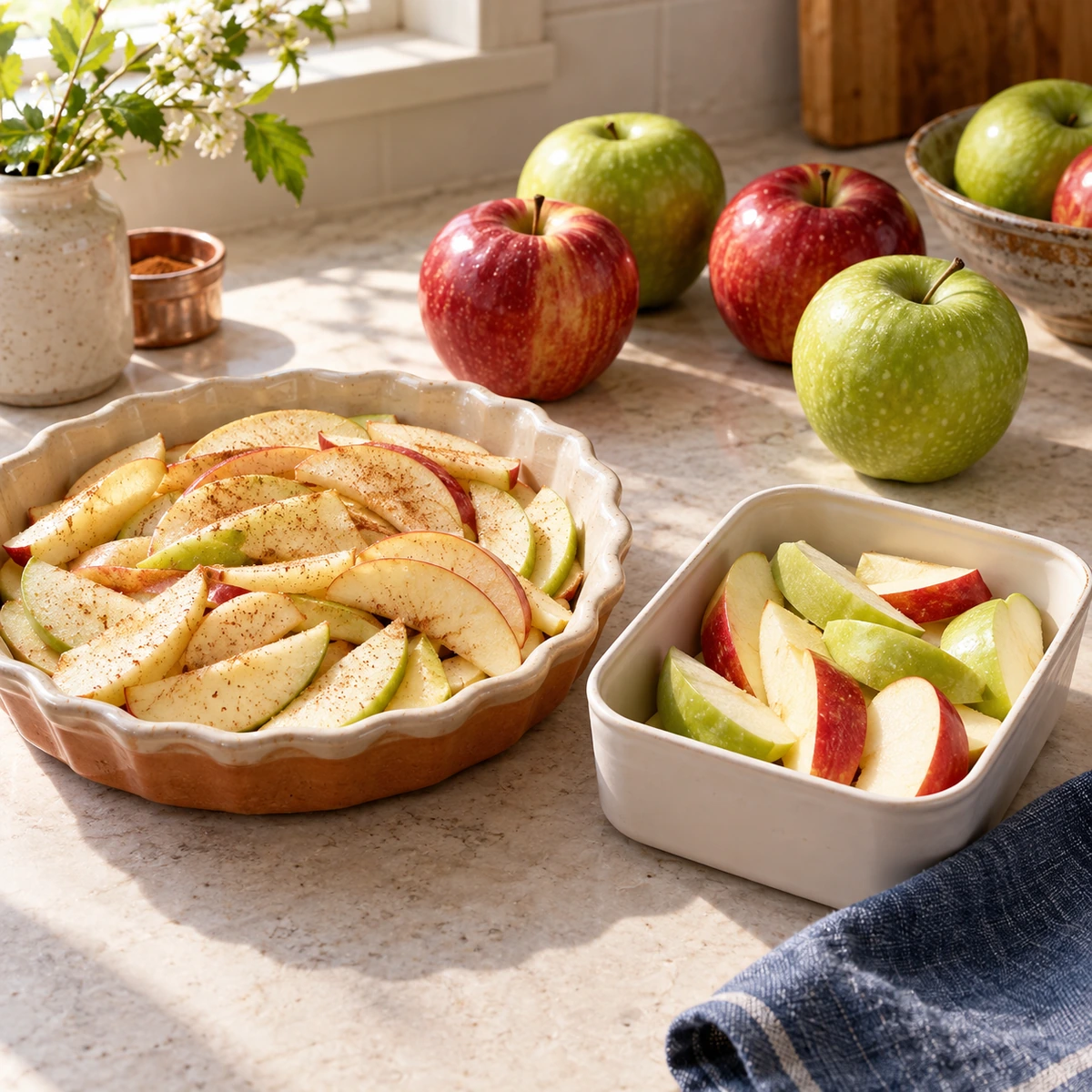
That sounds simple, but several decisions can get mixed together. One recipe calls for peeled, thin slices; another may keep the skin or use thicker pieces. Browning can be mistaken for a safety clock, and a slice size from one recipe can be carried into another method. Both shortcuts blur decisions that should stay separate.
A better routine separates the questions. Food handling comes first. Peel and cut size come from the recipe and the texture you want. Browning is mainly an appearance and quality issue, while refrigeration is a separate food-handling step. Once those decisions are clear, preparing apples for pie, lunches or snacks becomes much easier to organize.
Start with the recipe, not a one-size-fits-all rule
There is no single correct thickness for every apple pie. Published recipes use different cuts and different filling methods. A recipe that cooks the filling before it enters the crust may handle its apples differently from one that puts raw fruit directly into the shell. The same is true of peeling. Some recipes remove the skin for a softer, more uniform filling, while others may leave it on for colour, texture or convenience.
Before washing or cutting anything, identify four instructions in the recipe:
- Does it specifically say to peel the apples?
- Does it call for slices, chunks or another shape?
- Does it give a size or thickness?
- Does the filling go into the crust raw, rest with sugar, or cook before assembly?
Those details belong together. Follow them as a set rather than borrowing one instruction from another recipe. This guide can help you prepare the fruit cleanly and consistently, but it should not override the instructions for the pie you have chosen.
If your recipe is vague, decide what texture you want before cutting and choose one general cut for the batch. Keep the pieces reasonably consistent, but do not treat that choice as a promise that the same cut will work the same way in every recipe.
Wash first and settle the work area
Health Canada advises washing fresh produce under fresh, cool running water. Produce wash is not required. Wash apples before peeling or cutting so dirt from the outside is not carried across the flesh during preparation. Clean your hands, board and food-contact tools as well, and keep fresh produce away from surfaces used for raw meat.
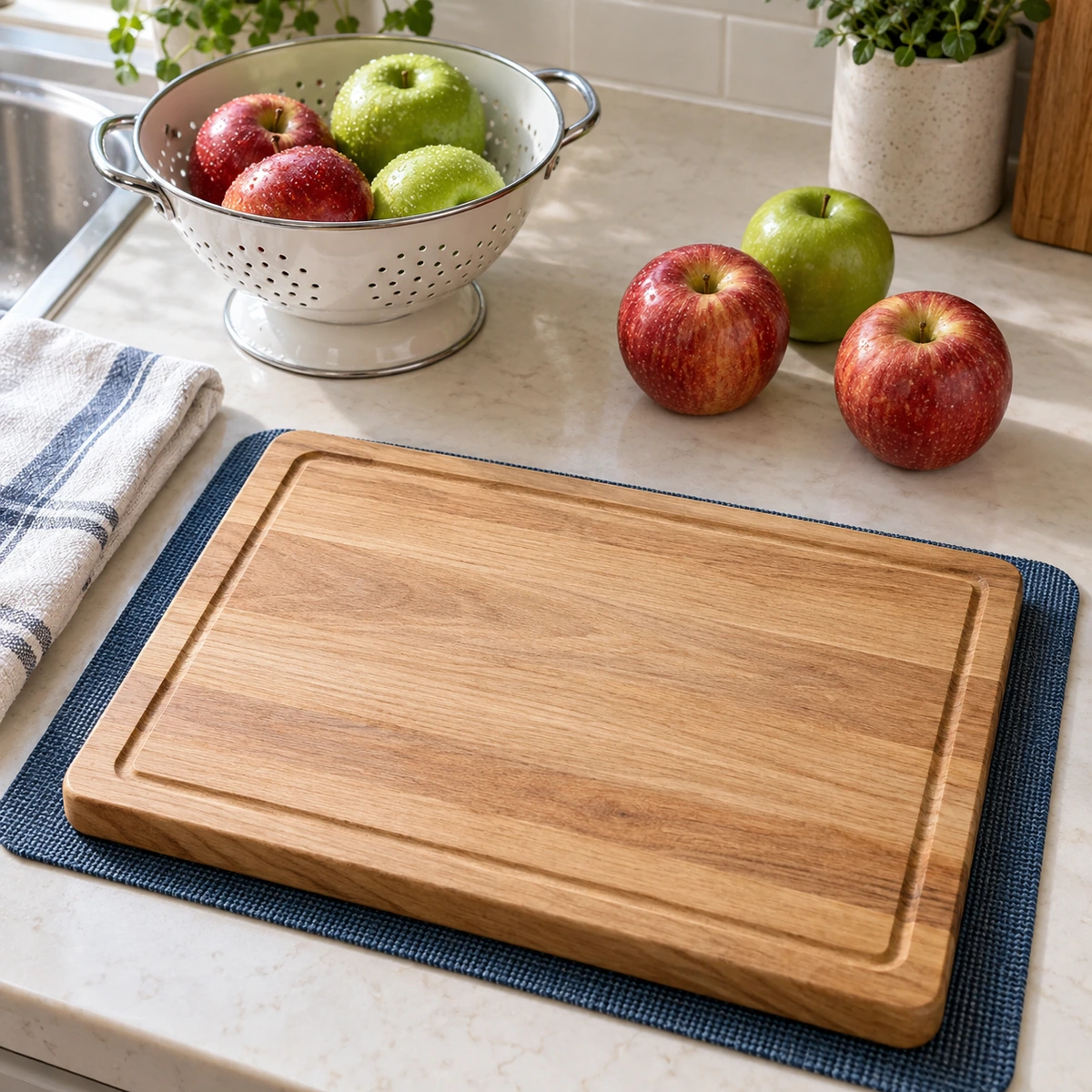
After rinsing, dry the apples enough to hold them securely. Put the cutting board on a counter where it will not slide. Clear enough space for the whole fruit, the prepared pieces and the scraps. This is a small change, but it prevents the bowl of finished fruit from competing with the next apple for room.
Inspect each apple as you work. Remove stickers. Cut away damaged areas as appropriate, and discard fruit that shows spoilage rather than trying to hide it in the filling. The goal is not to make every apple look identical. It is to start with fruit you can handle securely and prepare for the recipe in front of you.
Should you peel apples for apple pie?
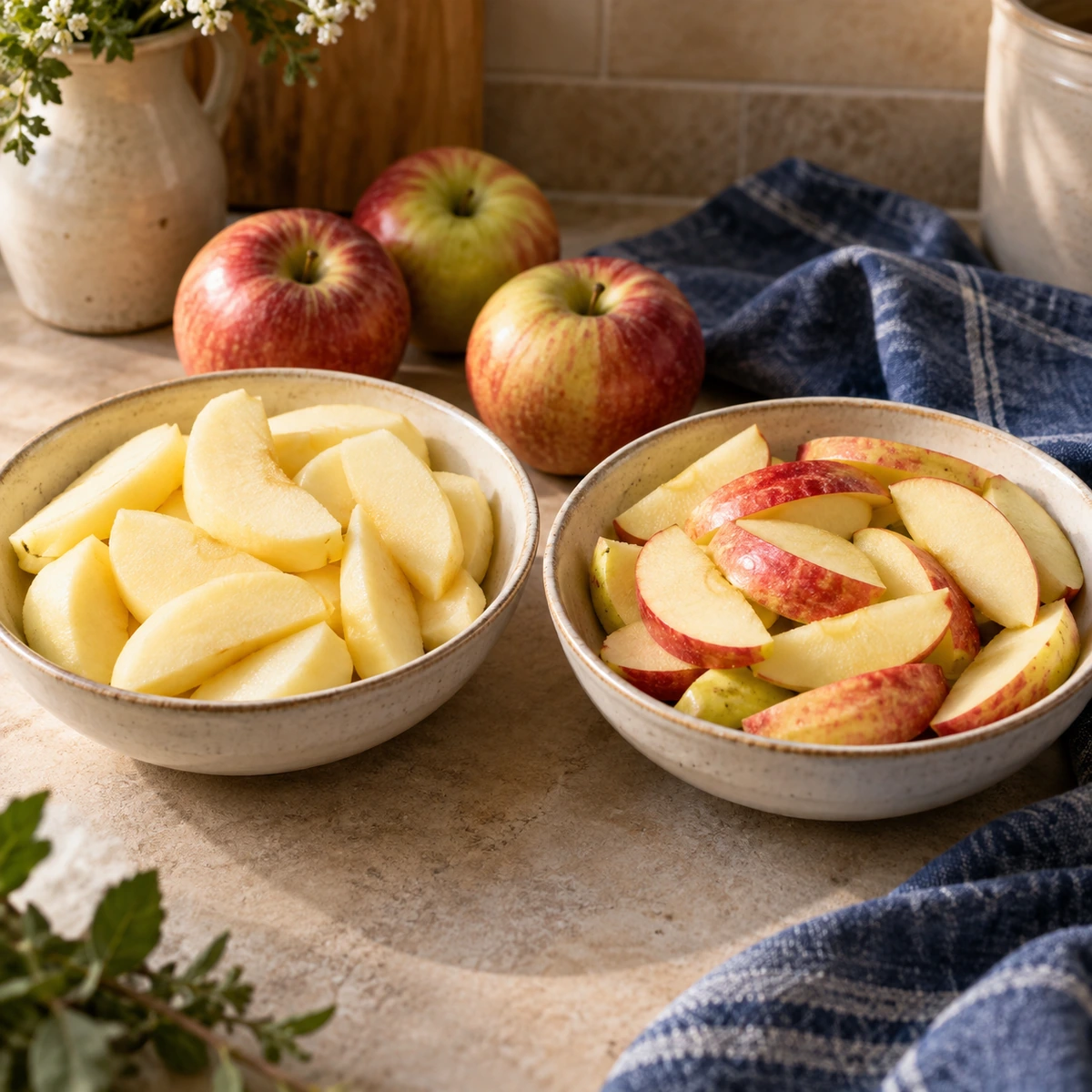
Peeling is a recipe and texture decision, not an automatic first step. If the recipe says "peeled," follow it. If the recipe leaves the choice open, think about what you want in the finished filling and whether the skin on the apples you bought feels tender enough for that result.
| Decision | What it changes | What to check |
|---|---|---|
| Peel the apples | Removes the skin from the filling and can make the pieces feel more uniform. | Confirm that the recipe expects peeled fruit and that you still have enough apple after trimming. |
| Leave the skin on | Keeps the skin's colour and texture in the finished dish. | Confirm that the recipe allows it and that the skin suits the texture you want. |
| Use both | Creates a mixed texture that may be useful in some informal bakes or snacks. | Do this only when it fits the dish, not because the prep decision was left unfinished. |
Leaving the skin on does not remove the need to wash the apple. Peeling does not remove that need either. Health Canada's advice applies before preparation because the outside of the fruit is part of the handling path.
If several varieties are going into one pie, the peel decision can also be made at the batch level. Peeling half by accident and keeping the rest only because time ran short is different from choosing a mixed texture deliberately. Decide once, then prepare the batch the same way unless the recipe gives another reason.
How to prepare apples for apple pie step by step
- Read the full filling method. Find the peel instruction, cut shape, specified size and any resting or pre-cooking step before you begin.
- Wash the apples. Rinse them under fresh, cool running water, then dry the outside enough for a secure hold.
- Choose whether to peel. Follow the recipe. If it leaves the choice open, make a deliberate texture decision for the whole batch.
- Remove the core. Use a method you can control on a stable board. Check each section for hard core material or seeds before it enters the filling.
- Cut to the recipe's size. Make slices or pieces that are reasonably even within the batch. Do not borrow a fixed thickness from an unrelated recipe.
- Measure after trimming if the recipe uses prepared weight or volume. Whole-apple weight and prepared-fruit weight are not the same. Follow the recipe's wording rather than guessing which one it means.
- Move straight to the next step. Mix, cook, assemble, refrigerate, freeze or serve the cut fruit promptly according to the recipe and Health Canada's produce guidance.
Work one apple at a time if that keeps the board clear. A production-line approach can also work: wash the full batch, peel the apples that need peeling, then core and cut. Choose the sequence that keeps the fruit stable and the prepared pieces moving toward the next recipe step rather than sitting out.
When you reach the last narrow section of an apple, do not force it through a tool or hold it in a cramped position simply to avoid a small scrap. Set it flat, change methods or stop. The safest useful cut is better than extracting one more piece from an unstable hold.
Keep the cuts consistent without chasing one thickness
Consistency within a batch is more useful than chasing one number for every pie. If some pieces are paper-thin and others are thick chunks, they may not soften at the same pace during the same recipe. You can reduce that mismatch by using the first suitable slice as a visual reference for the next few pieces.
That does not mean every slice must be measured. It means the pieces should belong to the same general cut requested by the recipe. Curved apple sections naturally create some variation. Trim or separate a noticeably oversized piece rather than reshaping every slice until no fruit is left.
Published recipes use different slice sizes and filling methods. Those differences show why a measurement belongs to the method that supplied it, not why one size should be copied into every pie. Keep the measurement attached to its original recipe.
Do you need to pre-cook the apples?
Only if the recipe calls for it. Some pie methods place raw prepared apples into the crust. Others cook, warm, macerate or otherwise handle the filling before assembly. Pre-cooking is not a general food-safety requirement for the cutting stage, and it does not solve every texture or liquid problem.
If a recipe includes a separate filling step, follow its order and quantities. Do not pre-cook the apples using instructions from one recipe, then finish them with the baking time and thickener from another. The fruit, sugar, starch, resting time and heat method work as a system.
Broad internet advice often creates confusion here because it separates one technique from the recipe that made it work. Check which method your chosen recipe uses, then prepare the fruit for that method.
Apple prep for snacks and lunches is a different job
For snacks, start with the amount you expect to serve rather than the quantity needed to fill a pie. Wash the apples, use a stable board, remove the core and cut pieces that are comfortable to eat. Peeling is optional unless the eater, recipe or serving plan calls for it.
Cut only what you need when that is practical. A smaller batch is easier to move into cold storage promptly and leaves less prepared fruit to manage. If you are packing a lunch, use a clean food container and keep the storage plan separate from any appearance treatment.
A pie instruction about sugar, lemon juice, pre-cooking or slice size should not automatically move into a snack container. It was written for a filling. Snack prep has a different goal: a clean, manageable portion that can be eaten or kept cold without borrowing unnecessary recipe steps.
Why do cut apples turn brown?
Cutting damages cells and exposes the interior of the apple to oxygen. Enzymes involved in browning, including polyphenol oxidase or tyrosinase activity, then contribute to colour changes on the cut surface. The visible change can happen while the fruit still looks otherwise normal.

Browning is not a timer that tells you exactly how long the fruit has been cut. A pale surface does not prove that storage has been adequate, and a browned surface does not by itself establish a precise storage history.
That is why appearance advice should not replace food-handling advice. If the apples are not being used immediately, Health Canada says cut produce should be refrigerated, frozen or eaten promptly. Follow that boundary even if you also use a recipe-approved method to manage colour.
What ascorbic-acid research can and cannot tell a home cook
A 2021 study published in the Journal of Food Biochemistry examined ascorbic acid and anti-browning activity in fresh-cut Fuji apple under defined research conditions. The study supports a limited statement: ascorbic acid showed anti-browning activity in that tested system.
It does not establish one household dose or soak time for every apple, every recipe or every commercial product. It also does not prove that lemon water, salt water, honey water or another home mixture will give an equivalent result. Those substitutions need their own evidence and conditions.
If your recipe or a packaged anti-browning product gives instructions, follow that specific guidance. Do not increase a concentration or extend a soak because a general article mentions ascorbic acid. For a pie, consider whether the treatment also changes flavour or adds liquid to the filling. For snacks, remember that reducing visible browning does not replace prompt refrigeration.
There is also no need to treat every apple slice. If the fruit is moving directly into a filling or being eaten soon, visible colour change may not be a practical problem. Solve the problem you actually have rather than adding a step by habit.
How should cut apples be stored?
Health Canada's produce guidance says to refrigerate, freeze or eat produce promptly after cutting. Use a clean food container, keep the fruit away from raw meat and avoid leaving a prepared batch on a work surface while other parts of the meal are handled.
This guide does not assign one number of hours because the cited guidance does not provide one for this specific home-prepared apple scenario. Your recipe, refrigerator conditions, packaging and intended use can differ. If a pie recipe tells you to hold a filling for a specific step, follow that method. If the apples are for snacks, prepare a quantity you can use within your normal safe food-handling routine.
Freezing is a separate choice. If you plan to freeze cut apples for later use, follow a tested freezing method written for the recipe or dish you plan to make. This guide does not assign a freezing method or holding time.
Where a manual peeler fits
A manual peeler can remove a thin outer layer when the recipe calls for peeled apples. The current ANGEER dual-blade peeler page identifies its smooth side for peeling and lists apples among the suitable produce examples. For this task, use only the smooth peeling side. The toothed side is intended for narrow strips and is not a substitute for the pie recipe's slice instruction.
Place the apple and board so the cutting path stays away from your fingers. Work while the fruit gives you a stable surface and a secure hold. Stop when the remaining section becomes awkward rather than forcing the last pass. Rinse food residue from both blade areas carefully and dry the tool before storage.
Judge a manual peeler by the job in front of you rather than by a speed promise. Check whether its peeling edge, handling arrangement and stated care routine fit the recipes you make.
Common apple-prep mistakes
Cutting before reading the recipe
This is how apples end up peeled when the skin was meant to stay, or sliced to a size that does not match the filling method. Read through assembly and cooking, not only the ingredient list.
Using a fixed thickness from another pie
A measurement belongs to the method that supplied it. Moving it to a different recipe can change the relationship between the fruit, liquid, thickener and baking time.
Treating browning as the storage rule
Surface colour and safe handling are different decisions. Manage appearance if it matters, but refrigerate, freeze or use the cut fruit promptly.
Adding an unverified anti-browning formula
A study on ascorbic acid under defined conditions does not validate every household mixture. Use recipe or label instructions rather than inventing a concentration or soak time.
Forcing the final small piece through a tool
Stop when you cannot keep the apple stable and your fingers outside the cutting path. Set the piece flat, change to an appropriate method or leave the scrap.
Frequently asked questions
Should you peel apples for apple pie?
Peel them when the selected recipe calls for peeled apples or when you deliberately want a filling without skin. If the recipe leaves the choice open, consider the texture of the apple skin and the finished pie you want. Not every apple pie requires peeled apples.
How do you prepare apples for apple pie?
Wash the apples under fresh, cool running water, dry them, decide whether to peel according to the recipe, remove the cores and cut the fruit to the recipe's specified shape and size. Keep the pieces reasonably even within the batch, then move promptly to the recipe's next step or cold storage.
How can you keep sliced apples from browning?
Ascorbic acid showed anti-browning activity in fresh-cut Fuji apple under the cited study's conditions, but that does not establish one household dose or soak time for every apple. Follow a tested recipe or product label when appearance matters, and do not treat browning control as a substitute for refrigeration.
How should cut apples be stored?
Health Canada advises refrigerating, freezing or eating produce promptly after cutting. Use a clean food container and keep the apples separate from raw meat preparation. The cited guidance does not provide one storage duration for every home-prepared apple batch, so this guide does not assign one.
Should you wash an apple before peeling it?
Yes. Health Canada advises washing fresh produce under fresh, cool running water, and produce wash is not required. Wash the apple before peeling or cutting so the outside is cleaned before preparation begins.
Make the decision before the first cut
Open the recipe and settle four things: peel or no peel, cut shape, cut size and what happens to the filling before it enters the crust. Then wash the apples, prepare only the amount you need and keep the next step ready. That short pause prevents most of the rework people run into during apple prep.
If you are still deciding which hand tool fits your normal routine, you can compare kitchen prep tools and check the exact blade and care instructions before buying. Canadian customers can also browse the Canadian shop after the prep method is clear. Choose the tool for a real recurring task, not to force every apple recipe into the same routine.
Sources
- Health Canada: Produce safety, accessed September 23, 2026.
- Health Canada: Safe food handling in the home, accessed September 23, 2026.
- Journal of Food Biochemistry via PubMed: Effect of ascorbic acid on tyrosinase and its anti-browning activity in fresh-cut Fuji apple, published December 2021.